The Curious Case of Eggnog
December 8, 2025
By Gretchen Westdal Centers
Humans are curious beings. Our creativity and ingenuity have produced world wonders, designed sprawling cities teeming with spectacle, engineered inventions that save us time and money, and created art so beautiful that onlookers weep.
We also invented eggnog.
A drink so alluring — and sometimes polarizing — that one must wonder: who exactly decided to combine eggs, milk or cream, and often alcohol into one seasonal beverage?
Thirteenth-century monks, that’s who.
 From Posset to Eggnog
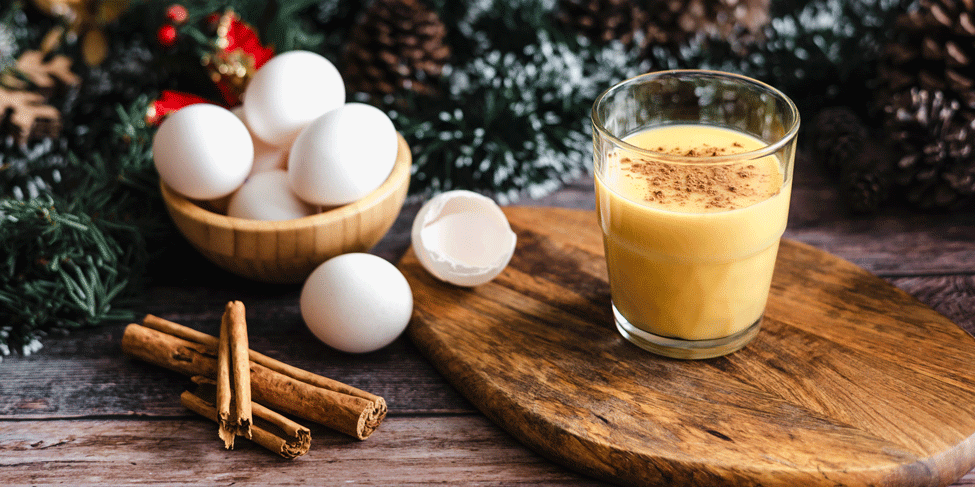
Culinary historians debate the exact origin of eggnog, but most agree it originated in present-day Britain. Tucked away in dreary, cold, isolated medieval England, these monks were (as one can only assume) a little bored with their run-of-the-mill ale. Using what was available, they created posset, a hot, milky ale-style drink that combined eggs and figs. An early recipe for posset is found in John Russell’s The Boke of Nurture from 1460 — which was a sort of guide on how to be a good servant — and notes that it should be consumed with cheese so one doesn’t fall ill (scientific evidence is still out on how this would exactly help).
As with all recipes throughout history, iterations and adaptations were made, and food safety eventually evolved so that those who consumed it wouldn’t end up sick. One later example comes from one in 1658 found in Robert May’s Accomplisht [sic] Cook, or the Art and Mystery of Cookery. The recipe, using 15th-century English, is as follows:
“Take the yolks of twenty eggs, then have a pottle of good thick sweet cream, boil it with good store of whole cinamon, and stir it continually on a good fire, then strain the eggs with a little raw cream; when the cream is well boiled and tasteth of the spice, take it off the fire, put in the eggs, and stir them well in the cream, being pretty thick, have some sack in a posset pot or deep silver bason, half a pound of double refined sugar, and some fine grated nutmeg, warm it in the bason and pour in the cream and eggs, the cinamon being taken out, pour it as high as you can hold the skillet, let it spatter in the bason to make it froth, it will make a most excellent posset, then have loaf-sugar fine beaten, and strow on it good store. To the curd you may add some fine-grated manchet, some claret or white-wine, or ale only.”
Later versions of posset were recommended by doctors and nurses for those with coughs or colds, or as part of a liquid diet for invalids recovering from various fevers and infections. The posset was seen as a healthful elixir, especially since the eggs contained essential vitamins, nutrients, fat and protein that helped patients recover and regain their strength.
By the 17th century, the British aristocracy had begun to consume the beverage. Traditionally, the milk would be curdled and then enriched with eggs, sugar, spices and sherry. Served warm, it was restorative against the bleak midwinter blues.
 Eggnog Goes Stateside
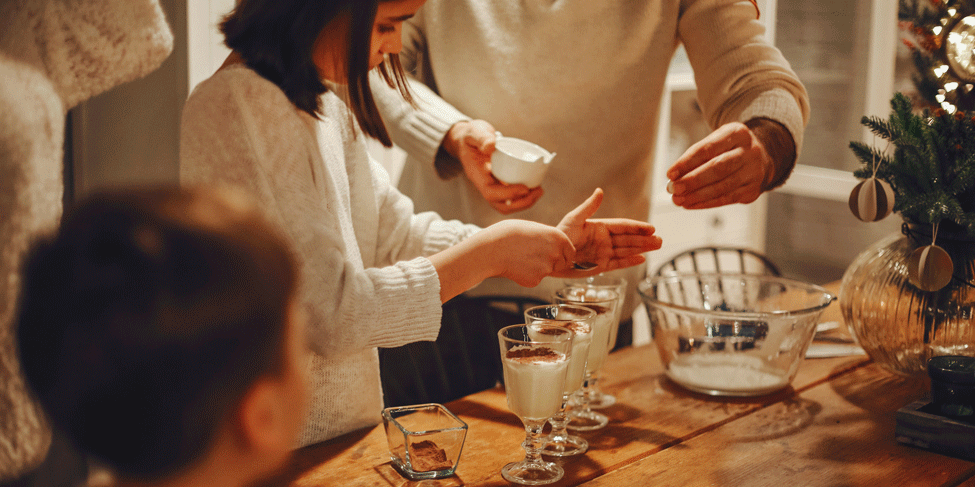
As Europeans began colonizing North America in larger numbers during the 17th and early 18th centuries, they took their traditions with them. Eventually, the name posset gave way to eggnog, with new cultures adopting the drink as their own. Derived from Scottish and Irish Gaelic, noggin roughly translates to “cup.”
Cups began to be filled with eggnog as colonial-era farms became more established and milk and eggs became more plentiful. In an effort to use everything they had and eliminate unnecessary food waste, the eggs and milk that were about to spoil were often turned into eggnog. Mixing in sugar and small amounts of alcohol, the drink’s shelf life was prolonged.
Ingredients that were once only for the very wealthy — sugar and alcohol, often rum — were more abundant and less expensive in the colonies due to the Triangle Trade. A hideous but very real part of American history, the Triangle Trade used enslaved peoples’ labor to produce highly profitable commodities that were traded near and far, enriching the new economy of the colonies. The name derives from the routes linking Africa, the Americas and Europe that enabled this economic model.
The average person would often enjoy their eggnog with rum, but more affluent families would mix several different liquors. Founding Father George Washington was said to have enjoyed quite an assortment of libations in his eggnog. According to historical lore, Washington served this drink to visitors at his Mount Vernon plantation.
“One-quart cream, one-quart milk, one dozen tablespoons sugar, one pint brandy, ½ pint rye whiskey, ½ pint Jamaica rum, ¼ pint sherry – mix liquor first, then separate yolks and whites of 12 eggs, add sugar to beaten yolks, mix well. Add milk and cream, slowly beating. Beat whites of eggs until stiff and fold slowly into mixture. Let set in cool place for several days. Taste frequently.”
There’s a debate over whether this was actually served or simply a variant of a common recipe. Still, it was commonplace for wealthy families to serve highly potent eggnog at winter gatherings.
 Drink (Responsibly) and Be Merry
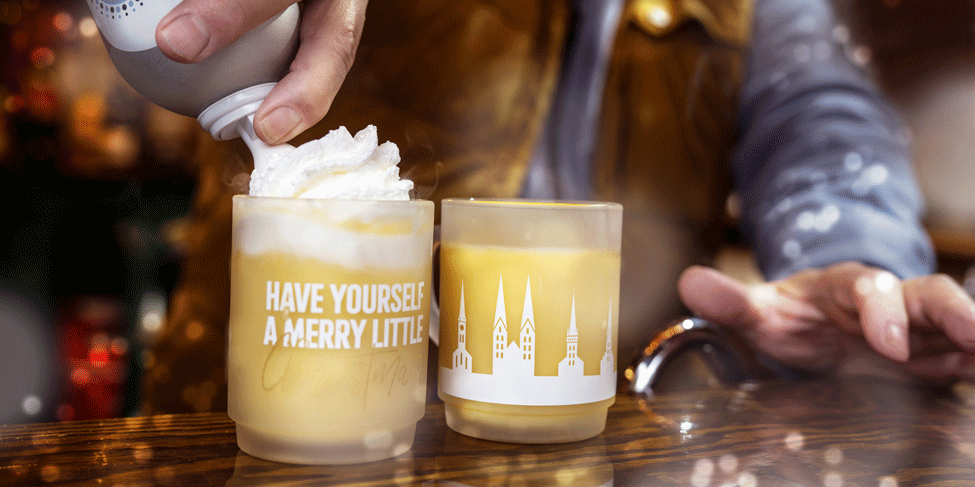
Today, we can find eggnog celebrated in many different beverages and foods. Grocery store shelves are lined with different types of premade versions. Coffee shops serve up delectable eggnog lattes, restaurants feature seasonal eggnog beverages and desserts, and local shops carry Iowa-made eggnog. Bakeries have fun with eggnog donuts and cookies. It’s a decadent and delicious seasonal treat that has taken many forms, from the humble posset.
“Eggnog has stood the test of time because it captures everything we love about the holidays — comfort, indulgence and a hint of nostalgia in every sip,” muses Breck Hunt, executive director for the Iowa Egg Council. “Eggs play a starring role not just for their richness but for their incredible versatility; they transform simple ingredients into something silky, festive and unforgettable. It’s a drink that brings people together and makes any holiday gathering feel special.”
While it might be tempting to make it at home, Hunt notes that it should be done with the utmost care due to the risk of Salmonella or other bacteria. Cooking the eggs to the appropriate temperature of 160 degrees F and using pasteurized eggs will ensure that you and your guests enjoy the beverage safely. Keep it family-friendly by serving as is, or add a spirit of your choice.
However you choose to enjoy this seasonal, festive drink, doing so surrounded by family and friends is a time-tested tradition celebrated near and far. So, raise a noggin to those who’ve enjoyed it before, those who’ve helped ensure its legacy and those who bring it into our homes.