Biosecurity Beams Bright on Iowa Farms
January 1, 2026
By Darcy Maulsby
From eye surgery to tattoo removal, lasers handle a variety of medical tasks. Would you be surprised to learn they’re also an invaluable biosecurity tool on some Iowa turkey farms?
“Our goal is to protect the health of our birds, especially since we dealt with a disease issue a few years ago,” says Sheila Larson, whose family markets about 160,000 turkeys a year. “That’s why we invested in lasers.”
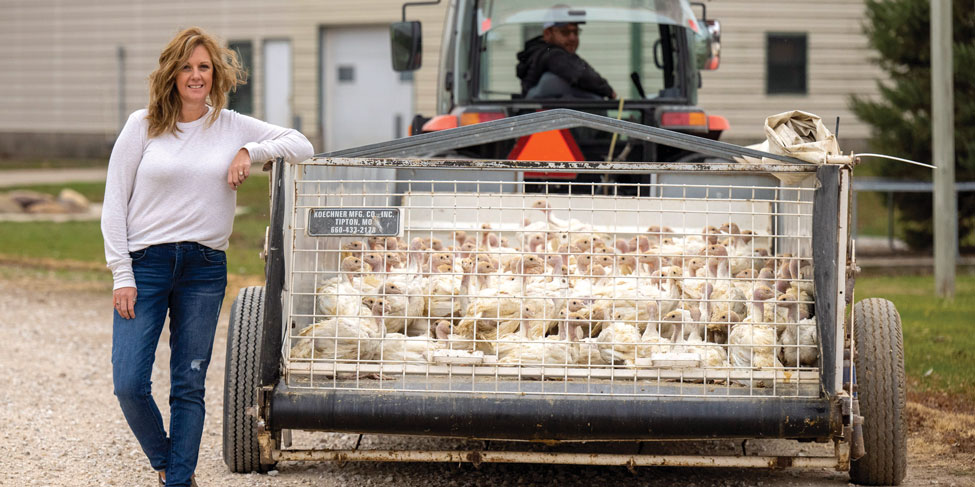
Larson, her husband, Chad, and their family raise turkeys in Hamilton County in north-central Iowa, near Ellsworth. On March 28, 2022, they received devastating news — their birds tested positive for highly pathogenic avian influenza (HPAI).
 The Larson family of Hamilton County raises turkeys with care, blending tradition and modern farming practices.
(Photo courtesy of Iowa Farm Bureau)
HPAI strains are deadly to domestic poultry (including turkeys and chickens) and can wipe out entire flocks within a matter of days. The virus is spread by migratory waterfowl through the feces of infected birds.
“We had to depopulate, clean and disinfect all our barns,” says Larson, who also serves as vice president of communications and membership for the Iowa Turkey Federation (ITF) in Ames. “Our birds were about a week away from harvest when we had to put them all down. This was extremely emotional for us.”
As the family prepared to restock their barns, they considered new ways to improve biosecurity on their farm. Biosecurity is a critical component for safeguarding the health of animals and plants on the farm. Preventing the spread of diseases and pests also impacts food safety, food availability and food prices.
Waterfowl pose an ongoing biosecurity challenge for turkey farmers, especially during spring and fall migrations. These wild birds are common around the Larson’s farm, which is near Little Wall Lake and a wildlife preserve.
When Larson’s sister in Montana saw an article about using lasers at airports, golf courses and other venues to keep birds away, she shared it with her Iowa relatives. “I found it fascinating,” Larson says.
After researching this technology, the family purchased AVIX Laser Bird Deterrents from the Bird Control Group. One laser is installed on a 60-foot pole. A smartphone app can control its bright green light.
The laser offers a humane option for discouraging birds from nesting, roosting or feeding in specific areas. The Larsons can control how bright the laser shines, when it operates and whether it projects a randomized pattern of light. “Migratory geese see the light as a threat, so they stay away,” says Larson, who also has a manual, hand-held laser to help repel unwanted waterfowl.
The family runs the pole-mounted laser from daybreak until about 10 p.m. The Larsons checked with their neighbors to make sure the light wasn’t a nuisance. So far, the technology has worked well to keep unwanted birds at bay. “Biosecurity never stops on the farm,” Larson says.
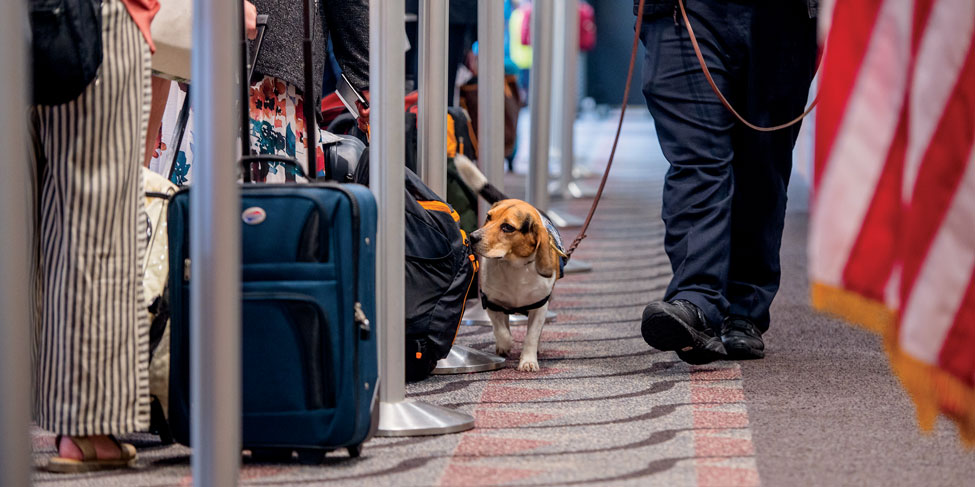
USDA Beagles are trained to sniff out multiple scents, such as fruits and meats, and the most experienced can recognize as many as 50 different odors.
Biosecurity Is a Team Effort
Biosecurity isn’t just for farmers. Everyone plays a part to ensure the health and productivity of America’s crops and livestock, and maintain the integrity of the food supply. One of the first lines of defense occurs at international airports and seaports.
All travelers entering the U.S. are required to declare meats, fruits, vegetables, plants, seeds, soil, animals and other related products they are transporting. Prohibited agricultural items can harbor plant pests and foreign animal diseases that could seriously damage America’s crops, livestock and the U.S. economy.
Have you ever seen adorable beagles at major U.S. airports? They’re part of the Beagle Brigade, a team of hard-working dogs employed by the U.S. Department of Agriculture (USDA) to sniff out plants and animals that have the potential to carry harmful diseases onto U.S. soil.
That includes foreign animal diseases like African swine fever. By sniffing out and seizing prohibited pork products that can carry the virus, the Beagle Brigade helps prevent this highly contagious disease from entering the country.
This is important to Pat Gent, who raises hogs in southeast Iowa near Wellman. “We’re always focused on preventing disease and keeping our pigs healthy. It’s important to prevent the physical movement of harmful bacteria and viruses.”
Biosecurity practices are a key to managing diseases like porcine reproductive and respiratory syndrome (PRRS), which causes reproductive failure in breeding animals and respiratory disease in pigs of all ages. “This virus can spread through the air,” says Gent, who adds that the virus can mutate quickly, making it challenging to control.
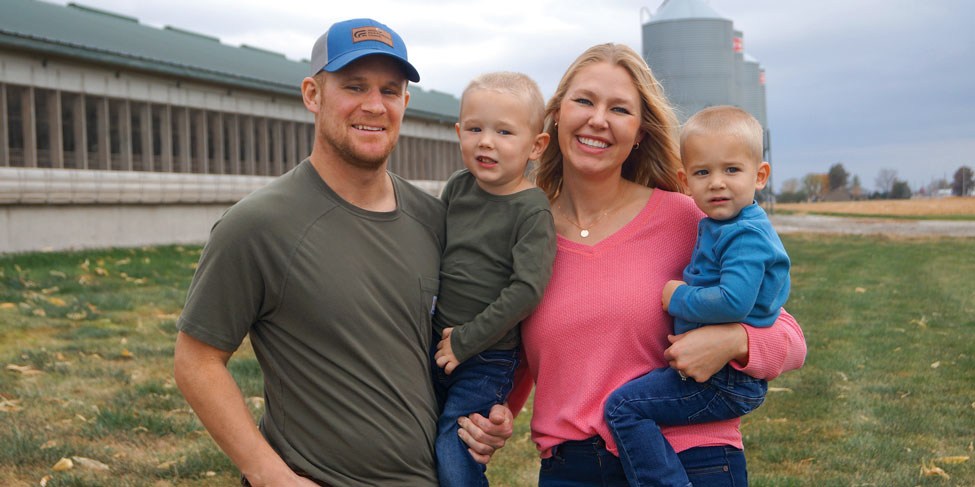 Pat and Krista Gent work to instill family farm values and inspire their children's interest in continuing the farming legacy.
(Photo courtesy of Iowa Pork Producers Association)
In the last decade, new barns built to house sows (mother pigs) often include air-filtration systems like those in hospitals. Since PRRS and other diseases can also be carried on people’s clothing, shoes, equipment and vehicles, Gent limits who can access his family’s swine farms.
“A lot of diseases can travel on your boots,” Gent adds. “That’s why we have rubber boots designated for each hog site.”
A shower-in/shower-out system also bolsters Gent’s biosecurity protocols. These showers are in separate rooms within the hog barns. “They’re kind of like a locker room at a gym,” Gent said.
Employees and farm visitors arriving at the farm must shower (clean towels are provided) and then put on clean coveralls, socks and boots before entering the areas where the pigs live. Before they leave, each person must shower out and change clothes. “We do loads of laundry every day,” says Gent, who farms with his younger brother, Jared.
Most of the biosecurity practices at the Gent family’s farms aren’t time-consuming. “You spend five minutes here and five minutes there, but it adds up to good biosecurity,” says Gent, who has received the Iowa Pork Producers Association’s Iowa Master Pork Producer award.
Biosecurity Never Stops
Biosecurity isn’t just for livestock farmers. Iowa soybean growers also follow biosecurity practices to manage yield-robbing soybean cyst nematode (SCN).
SCN is the single-most damaging pest affecting soybeans in America, according to Dr. Greg Tylka, director of the Iowa Soybean Research Center at Iowa State University. This microscopic, soilborne worm is present in nearly 75% of Iowa’s fields. It can reduce soybean yield by 50% or more, he notes. “Biosecurity to manage SCN isn’t just agricultural security; it’s economic security for Iowa.”
SCN is not native to Iowa. It was first discovered in North Carolina in 1954. By the late 1970s, it started appearing in soybean fields in northern Iowa. It can be transported by soil stuck to farm machinery and by wind-blown soil.
“SCN is a chronic problem, but it’s not a death sentence,” says Tylka, who appreciates funding from the Iowa Soybean Association that supports his SCN research. “Some key management practices can make a big difference.”
That includes rotating fields with a non-host plant, such as corn, planting SCN-resistant soybean varieties and using seed treatments that provide a highly targeted approach to biosecurity. “Seed treatments are a great ecological improvement, compared to broadcasting soil-applied nematicides,” Tylka says.
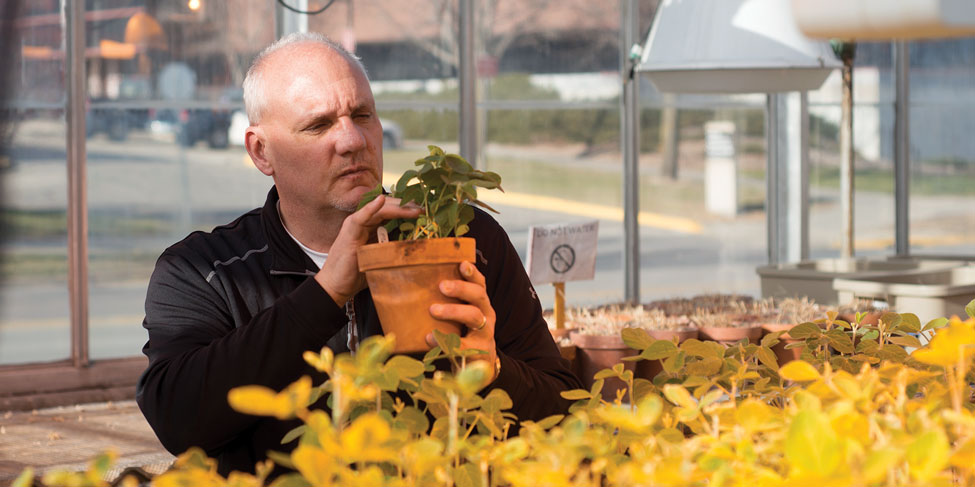
Greg Tylka examines soybean plants as part of his research at Iowa State University.