Focused on Fiber
July 23, 2026
By Gretchen Westdal Centers
If you go on the internet, are current on medical news, or talk to anyone in the fitness or nutrition space, you’ll quickly hear about fiber. It’s a buzzy topic, and perspectives vary depending on where you get your information.
To cut through the noise, we talked with Jody Gatewood, a registered dietitian with Iowa State University Extension and Outreach (pictured below, left), and Anne Cundiff, a registered dietitian with Hy-Vee, (pictured below, right) to help you get the facts and provide you with easy, practical ways to increase fiber in your diet.
What is fiber, and what does fiber actually do in the body?
Cundiff: Fiber is a carbohydrate found in a variety of foods, mostly fruits, vegetables and whole grains. Because it’s a carbohydrate, digestion begins in the mouth.
I often describe it as acting almost like a glue or a scrub brush. As fiber moves through the digestive tract, it can bind to substances such as excess fat, excess sugar and environmental exposures and toxins. It helps remove those substances from the body as part of the normal digestive process.
Gatewood: There are two main types of fiber: soluble and insoluble.
Soluble fiber dissolves in water and forms a gel-like substance in the stomach. That gel slows digestion, which helps regulate blood sugar levels and can help lower cholesterol. Soluble fiber is found in foods like oats, peas, beans, fruits, vegetables, apples, bananas and avocados.
Insoluble fiber works a little differently. It doesn’t dissolve in water; instead, it helps move food through the digestive system by adding bulk to stool. That’s the type of fiber that helps keep things moving and can prevent constipation. Insoluble fiber is found in foods like whole grains, beans and vegetables, such as cauliflower.
Both types are important, so eating a variety of fiber-rich foods helps support overall digestion and health.
What is the recommended daily amount of fiber for adults in the U.S.?
Gatewood: The average American gets only about 10 to 12 grams of fiber per day, which is well below the recommended amount.
Cundiff: Ideally, I like to see:
• Women: about 25 to 30 grams per day
• Men: about 35 to 38 grams per day
Men generally need a bit more because they tend to have a slightly longer digestive tract. Overall, most
of us should be getting roughly twice the fiber we currently consume.
What’s the biggest misconception about fiber that you see?
Cundiff: The biggest misconception is that more is always better. Right now, there’s a trend called “fibermaxing,” where people try to pack in as much fiber as possible through supplements, powders, drinks, gummies and fiber bars. While those products can have a place, people often jump straight to supplements instead of starting with whole foods.
Gatewood: Whole foods like fruits, vegetables, whole grains and legumes should always come first. Supplements can help fill gaps, but they shouldn’t replace real food.
What’s your favorite way to help people add more fiber through whole foods?
Cundiff: When I work with people, I start by asking a simple question: ‘What fruits and vegetables do you actually like?’ People often think healthy eating means forcing themselves to eat foods they dislike. But even if someone only enjoys
two or three fruits or vegetables, that’s a great starting point.
I talk about “always foods” — foods you enjoy enough to eat regularly. If someone loves bananas, grapes and oranges, those become their go-to fruits. If their favorite vegetable is canned green beans or a simple lettuce salad, that’s fine.
The key is consistency with foods people genuinely enjoy.
With grocery prices rising, what are some cost-effective ways to eat more fiber?
Gatewood: Fresh, frozen, canned and dried fruits and vegetables can all be good options. Frozen produce is especially helpful because it lasts longer and still retains its nutritional value.
Eating produce that’s in season can also help reduce costs. As the weather warms and more produce becomes available, prices often drop.
Another option is growing some produce at home. Container gardening on a balcony or deck is
a cost-effective, easy option.
Affordable fiber sources also include foods like oatmeal, brown rice and beans. Beans can even help stretch meals — for example, adding black beans or refried beans to taco meat can increase fiber and make the meal go further.
What role can Iowa-grown foods like soy play in a fiber-rich diet?
Cundiff: Soy products like tofu and roasted edamame are great because they provide both fiber and protein. Through our taste and sampling classes, we’re helping people explore soy-based foods and see how they
can fit into everyday meals.
Roasted edamame is one of my personal favorites — it adds a nice crunch to salads and serves as a crouton substitute while boosting fiber and protein.
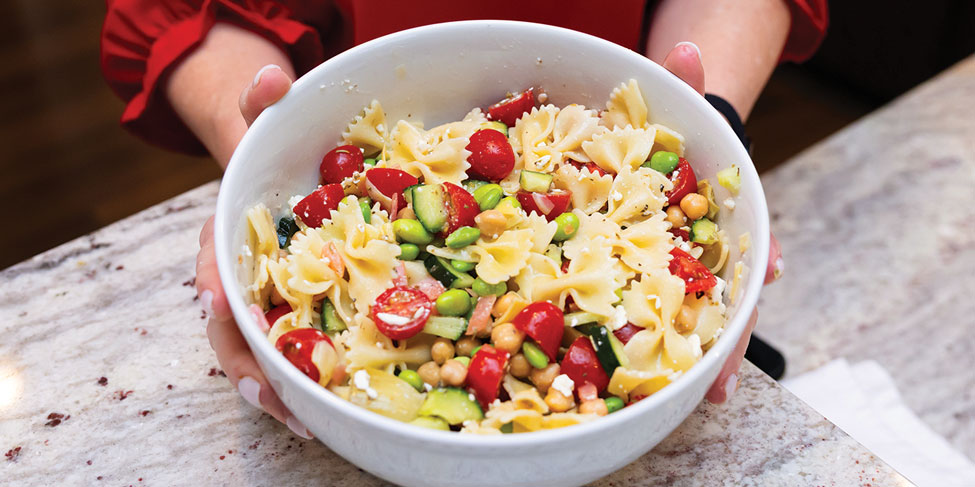 Greek Pasta Salad
• 3 ounces small farfalle (bowtie) pasta — Banza Chickpea bowtie pasta is a great fiber choice
• 1 can of Hy-Vee Garbanzo Beans, drained and rinsed
• 1 can (13.75 ounces) artichoke hearts, drained, rinsed and quartered
• 1 small zucchini or cucumber, seeds removed and chopped
• 1 ½ cup of frozen edamame, thawed
• ⅓ cup chopped red onion
• 1 pint of cherry tomatoes, halved
• ¼ cup fresh lemon juice
• 3 tablespoons Hy-Vee Select olive oil
• ¾ teaspoon Italian seasoning
• 3 tablespoons crumbled feta cheese
• Salt and Pepper
Cook pasta al dente according to package directions, drain. Rinse with cold water; drain again.
In a large bowl combine pasta, beans, artichoke hearts, zucchini, edamame, onion and tomatoes. Set aside.
In a small bowl, whisk together lemon juice, oil, Italian seasoning and salt and pepper to taste.
Drizzle over pasta salad in bowl; toss to coat. Sprinkle with feta, and serve.
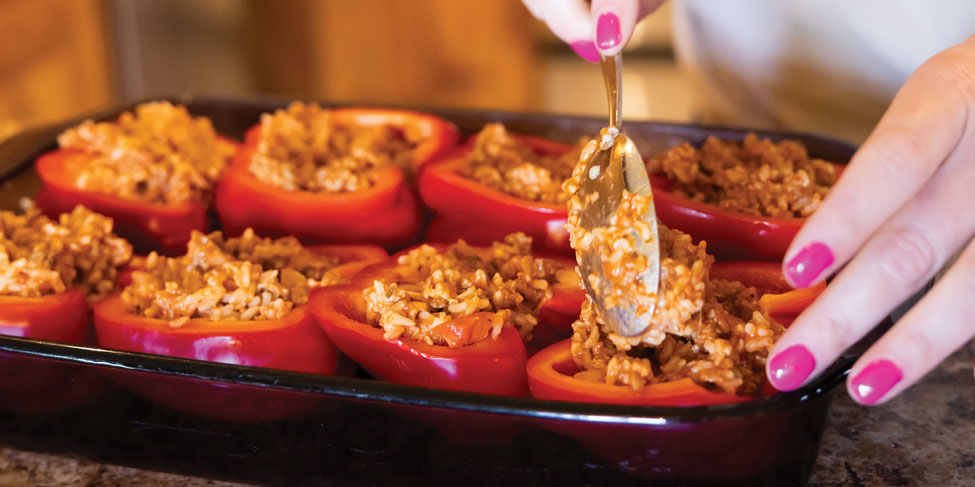 Stuffed Peppers
• ½ pound ground Italian sausage, turkey sausage or beef
• 1 onion, chopped (about 1 cup)
• 1 teaspoon dried oregano leaves
• 1 can (15 ounces) spaghetti sauce
• 3 cups cooked brown rice
• 1 cup shredded mozzarella cheese (divided)
• 4 green or red peppers (softball-sized)
Preheat oven to 350 degrees F.
Sauté sausage and onion in a large skillet over medium heat until browned and cooked to 155 degrees F. Pour off any fat.
Stir in oregano, spaghetti sauce, rice and ½ cup cheese.
Wash peppers, cut in half lengthwise and remove seeds. Arrange in a 9 x 13-inch baking dish.
Spoon sausage mixture into the peppers, mounding on the top.
Cover with foil. Bake for 30 minutes. Remove the foil and sprinkle remaining ½ cup cheese on top. Continue to cook another 10 minutes.
This recipe is provided by Iowa State University’s Spend Smart. Eat Smart. – Registered Trademark.