Land, Livestock and Legacy
January 1, 2026
By Gretchen Westdal Centers
Famed American novelist Wendell Berry once said, “We have neglected the truth that a good farmer is a craftsman of the highest order, a kind of artist."
Farmers are indeed craftspeople, artists and visionaries. The creativity, patience and focus it takes to run a successful farm operation are often learned through significant dedication of time and ingenuity. It’s usually inherited, part of one’s lineage and heritage.
That is certainly the case for Tim and Heather Marek of Marek Land and Livestock. Tim Marek’s family has been farming in eastern Iowa, just outside Riverside, since 1896. Heather, Tim’s wife, comes from a century farm just on the other side of the county.
Together, they have four daughters who have grown up showing pigs, sheep, goats and cattle. The family recently welcomed the seventh generation of farmers — a grandson — who will have the opportunity to continue this rich agricultural tradition, rooted in raising and caring for their
land and animals.
“Tim has always loved animals,” laughs Heather. “Going to the local sale barns from a young age with his grandpa whenever he could. And then he started taking a real interest in genetics in junior high and high school. He was showing hogs and cattle at the county fair, and hogs at the state fair and nationally as well. You name an animal; he has probably had it at some point in his life.”
Generational Farming
The focus for Marek Land and Livestock is right in its namesake. The land their family and animals live on is to be tended to and nurtured for future generations. And their animals are to be exceptionally bred and well cared for.
“As far as a mission for the farm, we’re really passionate about teaching the new generations,” Tim explains. “We want to be able to maintain and care for our land. When opportunities arise to grow, we will be able to have all generations involved.”
There is significant involvement from the entire family. Like most family-run farms, everyone pitches in to help. In addition to farming about 1,500 acres of corn and soybeans between Tim, his dad and brother, Tim and Heather specialize in breeding Hereford-Angus cattle. They run a 200-head cow-calf operation of Hereford-Angus. This is a cross between British breed Hereford cattle and Scottish breed Angus cattle, yielding a tender, flavor-filled cut of meat.
Tim has a background in genetics and breeding. After attending Iowa State University, where he was on their livestock judging team, and years of hands-on experience, Tim ventured into Hereford-Angus breeding.
“We’ve always liked genetics, and as our cow herd evolved, we’ve tried many different things,” Tim explains. We’ve looked at a lot of different breeds of cattle, and the more I did it, the more black and white it got that British-bred cattle are going to grade and marble better. They’re the ones that are going to basically create a better eating experience and have great maternal and economic traits.”
Tim goes on to say that this specific breed also has a wealth of data — its expected progeny difference (EPD) — that helps producers better understand the animal’s genetic worth. This data can help improve decision-making on weaning, feed efficiency, reproductive and maternal traits, and other characteristics, enabling the farmer to better understand the herd. Downstream effects of using the EPD can include improved herd genetics, greater predictability and better alignment with targeted market needs.
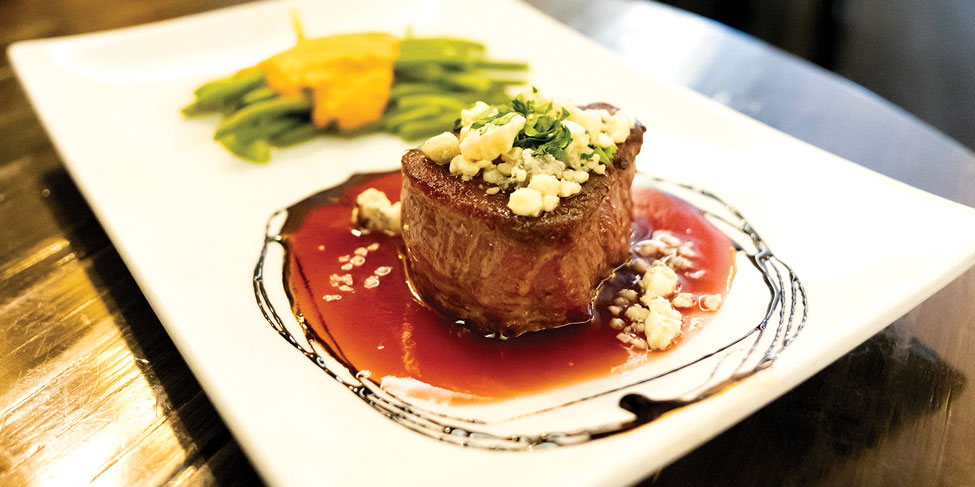
A variety of menu favorites at the Northside Diner and Café Dodici feature Marek's beef.
Top-Tier Steers
For Marek Land and Livestock, this has resulted in a healthy and happy herd that produces a premier cut of beef. The cattle roam the pastures surrounding the farm, where they are free to graze. Tim also moves the cattle to enjoy the alfalfa and rye cover crops that are used rotationally in their row-crop fields, which also plays into the Marek’s focus on land stewardship and sustainability. This means the soil is naturally enriched while providing a healthy, renewable food source for the cattle.
“The longer I’m grazing cattle on the fields — whether they are corn one year or soybeans the next — my yields just continue to get better,” says Tim. “That rye is getting processed through a cow and spread back over the field. I think it’s doing great things for infiltration and soil health.”
It’s this ecosystem that creates ideal conditions for both cattle and crops. By focusing on a diversified operation and using all components together, the Mareks are sustainably creating opportunities for their crops and cows to thrive.
After thriving on pasture, the cattle are finished on a corn-based grain ration that creates a rich, distinctive flavor that Marek beef has built its reputation on. Around 15 months of age, the cattle are processed nearby at a state and federally inspected locker.
It’s this commitment to pasture-raised cows that are free to graze and then, when the time comes, finished nearby, that has garnered the attention of local restaurants and customers.
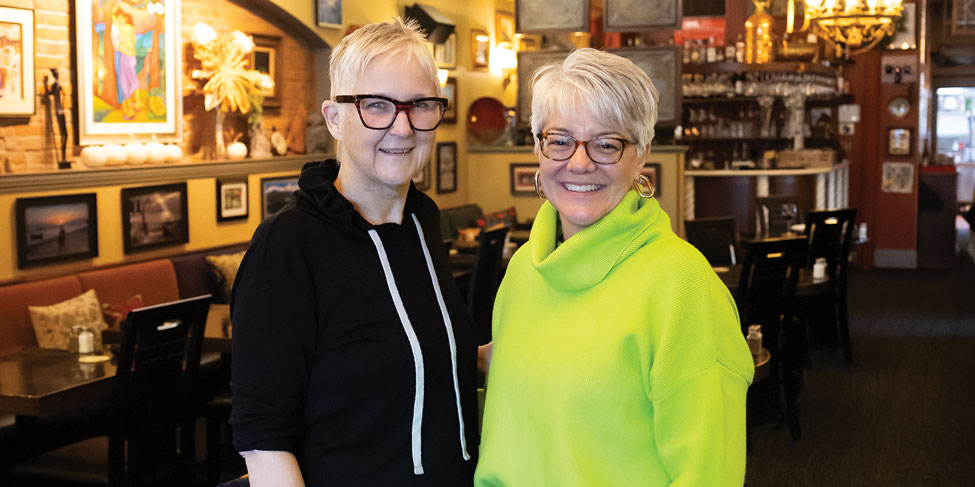 Lorraine Williams and Heather Marek enjoy supporting each other's businesses in small-town Iowa.
Pasture to Plate
In nearby Washington, Marek beef can be found on restaurant menus. At Café Dodici and Northside Diner, it is a customer favorite. Lorraine Williams, along with her husband Ed, have owned and operated Café Dodici for 21 years, and have always longed for a local beef supplier.
“We have purveyors that bring us food, and we’re always trying to get in the best we can,” says Lorraine. “I have a finer dining restaurant, so I want to be sure that I have the best quality. So, it was really a dream come true, again, that the Mareks approached us and had this opportunity to share their beef with us.”
Lorraine shares that her customers love being able to eat something that comes straight from the pasture to their plates. As she walks through the dining room each night, checking in with the full tables, she hears how happy people are with their different steaks and beef dishes.
“People want to support local,” she notes. “I think that’s the future. We must rely on each other, and supporting local farmers is something everyone is on board with.”
Isabella Santoro, owner, operator, and daughter of Lorraine, shares her mother’s sentiment about buying a quality product and supporting the local economy, which is one of the many reasons she purchases her beef from the Mareks.
"I want to buy local because we feel it’s more sustainable and environmentally conscious,” Isabella explains. “It cuts out multiple middlemen, and the quality is so much higher — they don't use hormones. It's reassuring to personally know the people raising and, ultimately, producing the meat we serve."
Both Lorraine and Isabella explain how beneficial it is to know a local product’s consistency and quality compared to something shipped in from elsewhere. “Restaurants are an unpredictable business,” laughs Lorraine. “It’s reassuring to know we can call them, and they are so helpful. They have the same vision we do about community and sustainability, and it really drives what we all do.”
Farming For the Future
Like most farmers, Tim and Heather feel grateful to do this work. They also feel grateful that their four daughters and their husbands share the same love of farming and the passion needed to continue the work. The future is always uncertain, but the Mareks know that their families’ hard work and dedication are a blessing.
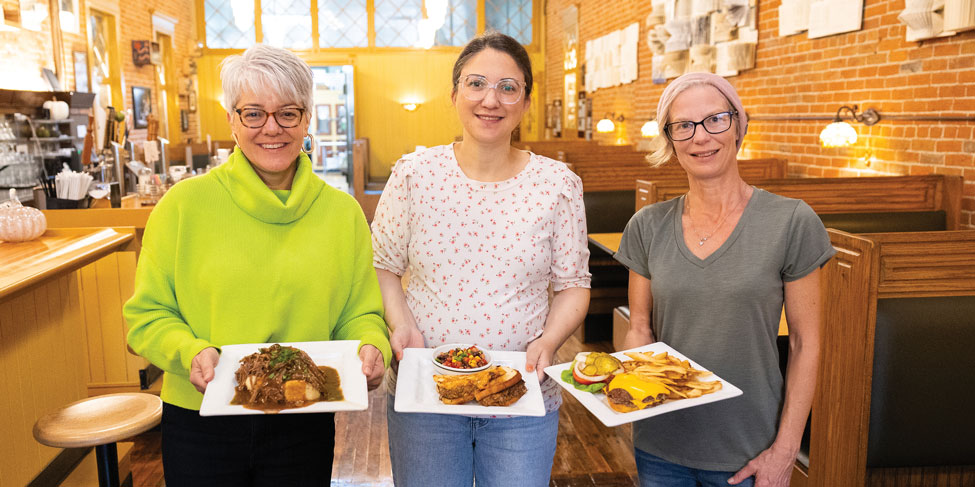 (Left to right) Heather Marek, Isabella Santoro and Jen Santoro at Northside Diner in Washington.