When it Matters Most
January 1, 2026
By April Pearson
ISU Extension and Outreach (Extension) connects Iowans with education, research and expertise to help address challenges unique to our state. With support from dedicated specialists and a presence in every county, Extension strengthens communities by exposing Iowans to Iowa State resources. We sat down with Health and Human Sciences Manager Tammy Jacobs and Behavioral Health State Specialist Dr. David Brown to learn more about how they help Iowans.
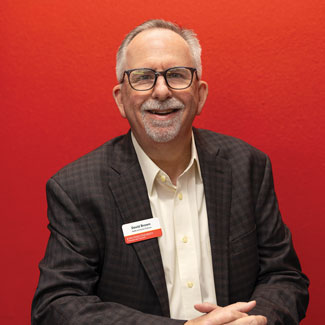 BROWN: Extension is a broad organization comprised of four programs: Agriculture and Natural Resources, Community and Economic Development, 4-H Youth Development, and Health and Human Sciences.
Health and Human Sciences is further split into two areas: Nutrition and Health, and Family Well-Being, which is where Tammy and I are. We have a large scope, covering early childhood to end-of-life issues.
JACOBS: Extension is the arm of the University that reaches out to the community to provide educational offerings through those four programs. We have an office in every county, with specialists from each program. Approximately 870 faculty and staff support the statewide initiative.
 Coping with crisis
Farming is a stressful, unpredictable job that can negatively impact mental health. Brown and Jacobs work to create a supportive community around the farmer, providing practical information, relevant resources and access to qualified professionals.
JACOBS: Since 1985, we’ve run the Iowa Concern Hotline, which began because of the farm crisis but has since evolved to meet the needs of more Iowans across the state. We’re available 24 hours a day, seven days a week. There’s always somebody there to answer the call.
Our staff is trained in stress counseling, because there are many stressors in a farmer’s life. We talk about their stressors and get them started on self-care, because we know that if they take better care of themselves on a regular basis, they’re going to be able to handle future crisis situations.
There are also on-staff attorneys who, at no charge, can help explain legal situations. They don’t represent or advise, but they can provide insight. We work closely with the Center for Ag Law and Taxation, especially when creating succession plans. It can be difficult for farmers to transition the legacy they created.
Through the program, a farming counselor can work with individuals on planning and determine if insurance is required.
BROWN: We knew there was a barrier to farm workers seeking mental health care, so around 2019, with funding from USDA NIFA (National Institute of Food and Agriculture), we began providing stress-assistance programming to farmers and farm advocates across Iowa.
Mental Health First Aid helps community members identify and respond to signs of mental health and substance use challenges. Question, Persuade, Refer teaches people how to recognize the warning signs of a suicide crisis. Relationships Can Heal: Knowing the Farmer Client trains mental health and health care providers on farm culture, so they have a better idea of how to communicate with farmers and farm family members in a way that won’t inadvertently push them away from their services.
Our programming isn’t necessarily for the farmer; it’s for individuals who support the farmer, because we know that a person is more likely to seek help if someone close to them suggests it.
JACOBS: A lot of times, we don’t hear from the farmers directly. We hear from children. We hear from spouses. We’ve even heard from concerned bankers who want to know how they can help.
BROWN: It’s about building a community that understands the signs of distress, knows how to respond and can point farmers in the right direction for mental health resources. And of course, one of those resources is the Iowa Concern Hotline. If we can get a farm worker to call the Iowa Concern Hotline, that’s a win.
Weathering the storm
In 2024, Iowa Concern responded to more than 4,700 calls related to stress, agricultural issues and natural disasters. After the tornado in Greenfield and flooding in Northwest Iowa, Extension offered youth day camps designed to help kids process their experiences. After Spencer was flooded, Extension served meals for more than 1,000 people and provided educational resources. After the Lyon County fairgrounds were damaged by flood, Extension found alternative locations for 4-H and FFA judging events and livestock shows.
BROWN: In the fall of 2024, we did a lot of training for our programs: Mental Health First Aid; Question, Persuade, Refer; Self-Care Strategies; and Money Smart. From October 2024 to August 2025, we conducted 77 training sessions for about 1,700 people across the 21 counties affected by the disasters. We brought in our farm financial analysts to conduct outreach to agribusinesses and to provide one-on-one financial education. We obviously promoted the Iowa Concern hotline. Additionally, we launched a website and created social media content to reach even more communities.
JACOBS: Another thing we did later in the year in Spencer and Greenfield was to collaborate with the Rural Action Partnership on events that offered free resources and information. We partnered with many organizations — including Childcare Resource and Referral, Volunteer Income Tax Assistance and the Iowa Insurance Division — to create a one-stop shop for people impacted by the disasters. 4-H staff and volunteers had activities for kids, and there were speakers on mental health, finance, insurance and legal issues.
This was a way to provide ongoing assistance, because there’s always help right after a disaster. Then, months down the road, when people finally have their heads on straight and realize, “Oh, I don’t have my social security card,” we can help them keep moving forward.
We held Greenfield’s event on the anniversary of the tornado. They brought the whole community together and hosted a large remembrance celebration. They had free breakfast, lunch and supper, as well as various activities throughout the day. Individuals who’d been impacted still had a lot of recovery to do, but they came to the celebration, and I think it helped them in their healing. It was a very moving day.
Supporting all Iowans
This is just a small fraction of the work Brown and Jacobs do in their relatively small corner of Extension, which offers all Iowans workshops, courses and events addressing youth innovation, food insecurity, technology and the arts, professional development, conservation, community leadership, and more. Yet Jacobs and Brown’s impact is exponential, reaching individuals, families and communities across the state.
BROWN: Between Tammy and me, we have just done an amazing amount of work with all our staff, supporting farmers over the last seven years. I think we’ve touched most commodity groups, most farm groups and many co-ops in Iowa with everything we’ve done. We’re excited to continue this work to support Iowa’s farmers and farm community.
JACOBS: There’s still a lot more work to do.