A Confluence of Culture
October 5, 2026
By April Pearson
It’s where three rivers converge and three states meet. It’s where Native Americans communed, Lewis and Clark experienced the Loess Hills, and livestock and crops combined to create an agricultural powerhouse. It’s home to amazing museums, restaurants, architecture and people. It’s Sioux City, and its rich narrative is noteworthy.
How Sioux City Started
Sioux City may not exist if not for a Sioux woman named Iron Woman Who Laughs.
Centuries before Sioux City was Sioux City, it was home to the Yankton Dakota and Santee Dakota tribes of the Great Sioux Nation. In 1804, the Lewis and Clark Expedition noted the Loess Hills’ potential for westward expansion. But peaceful passage for pioneers required the goodwill of the Indigenous population. “The Yankton were the most important military force in the area at the time,” says Matt Anderson, curator of history and exhibitions for the Sioux City Public Museum. “They could have easily scared off any fur traders, because they were that numerous and powerful.”
Iron Woman Who Laughs (a Yankton woman) married War Eagle (a Santee man) in 1830 and welcomed him into the powerful Yankton tribe, where he eventually became chief. Contrary to his name and the fighting power of his people, Chief War Eagle was a peace-loving man who worked relentlessly for the mutual benefit of Native Americans and white settlers.
The couple’s daughters, Dawn and Blazing Cloud, married prominent French-Canadian fur trader Theophile Bruguier. In 1849, they permanently settled in the area, ushering in a new era of trade and farming. Sioux City was officially incorporated in 1857 and quickly grew into a vibrant hub.
If Iron Woman Who Laughs hadn’t married War Eagle, he wouldn’t have become chief of the powerful Yankton tribe. His unique ability to broker peace among vastly different groups led to a pioneering settlement that became a thriving community and ultimately gave rise to the Sioux City we know today.
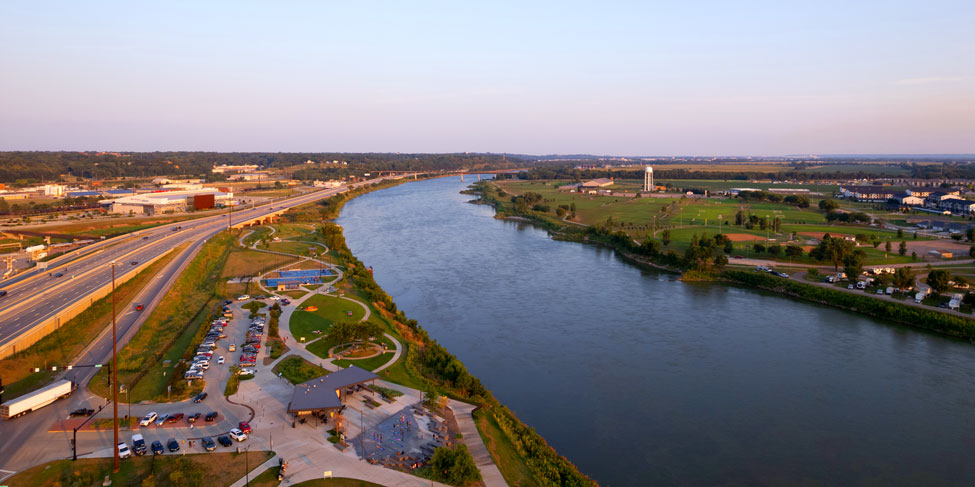
The Missouri, Big Sioux and Floyd Rivers all converge in Sioux City. The Floyd River is named after 22-year-old Sargent Charles Floyd, the only person to die on the Lewis and Clark Expedition, likely of a ruptured appendix. He’s buried on a bluff overlooking the Missouri River.
An Agricultural Epicenter
Located on the border of Iowa, Nebraska and South Dakota, Sioux City is perfectly situated between cattle country and the corn belt. Feeder cattle from big ranches in Nebraska and South Dakota would be brought to Sioux City stockyards to be fed Iowa corn and soybeans. The fattened cattle, as well as hogs from Nebraska, could then be sold for processing. “The meat industry has been essential to Sioux City since the 1870s,” says Anderson, “and it all has to do with geography.” Sioux City Stockyards were one of the biggest facilities in the U.S. for many decades.
Meat-packing jobs drew in immigrants from Europe, Eastern Europe, Southeast Asia and Latin America. “It was a tough job that a lot of people didn't necessarily want to do, but you could make pretty good money doing it as an immigrant laborer, and that continues to be the case today,” says Anderson. Agricultural corporations currently operating in the area include Perdue Premium Meat Company, Seaboard Triumph Foods, Smithfield Foods and Cargill.
Things to Eat & Drink
Sioux City has fabulous flavors from all over the world. Here are a few local favorites:
Cultures & Cuisines
Braunger Steak Co. — a one-stop butcher shop that carries meat, seafood, cheese and wine.
Crave — a contemporary and eclectic American kitchen and sushi bar with scenic river views.
Da-Kao — a Vietnamese restaurant where every dish is handmade with fresh ingredients.
El Fredo — a classic pizza joint with pastas, salads and sides; known for its sauces.
Habesha — an Eritrean and Ethiopian restaurant with sensational food and great service.
Jerry’s Pizza — a local tradition since 1959; known for its thin crust and ample toppings.
Kahill’s Chophouse — a fine dining steakhouse with riverfront dining in Nebraska.
La Juanita — an authentic Mexican restaurant with distinct flavors from Jalisco, Mexico.
Milwaukee Wiener House — a family-owned and operated hot dog shop built in 1918.
Pete’s Thai Kitchen — a laid-back eatery featuring delicious stir fries, curries and noodle soups.
Tastee Inn and Out — a family-owned drive-thru famous for its onion chips and dip.
Sweets & Treats
Black Box Bakery — a sweet spot with made-to-order goods baked from scratch with fresh ingredients.
Cleo’s Bakery — a pastry shop with inspired flavors from Durango, Mexico.
Koated Kernals — a specialty popcorn shop with tasty treats made with Sioux City’s Jolly Time popcorn.
Palmer’s Olde Tyme Candy Shoppe — the storefront and small museum of a nationally recognized candy company.
Brews & Brews
Council Oak Supply — a coffee roaster and coffee bar located in a cool old building on historic Prospect Hill.
Hardline Coffee Co — a coffee shop specializing in ethically sourced coffee and house-made syrups and pastries.
Jackson Street Brewing — a brewery featuring taprooms and tavern fare.
Marto — a craft beer and grub pub in a trendy, rustic-industrial venue with outdoor seating.
Pierce Street Coffee Works — the oldest coffee shop in town; also offers pastries, soups and sandwiches.
Sioux City Distilling — a tasting room, restaurant and event venue featuring spirits crafted with local ingredients.
Things to See & Do
Sioux City has a wide variety of attractions to suit everyone’s interests and budget.
Arts & Entertainment
Lewis and Clark Interpretive Center — a cultural venue offering performances and programming for children and adults.
Orpheum Theatre — a performing arts center built in 1927 that’s home to the Sioux City Symphony Orchestra.
Sioux City Art Center — a museum featuring more than 1,200 works of art in its permanent collection and temporary exhibits.
Vangarde Arts — a live music venue and art gallery lounge; home of the Alley Art Festival.
Museums & Monuments
Jolly Time Museum — a 100-year history showcasing how Jolly Time Pop Corn went from a Sioux City small business to a national brand.
Sergeant Floyd Monument — a stone obelisk dedicated to Sgt. Charles Floyd.
Sergeant Floyd River Museum and Welcome Center — a retired riverboat tugboat that’s permanently docked on the Missouri River.
Sioux City Public Museum — an interactive learning space detailing the region’s history and transformation.
Sioux City’s Railroad Museum — a collection of steam locomotive servicing buildings, structures and archeological remnants.
War Eagle Monument and Park — a bluff offering panoramic views of the Missouri River valley where Iowa, Nebraska and South Dakota meet.
 Natural Wonders Never Cease
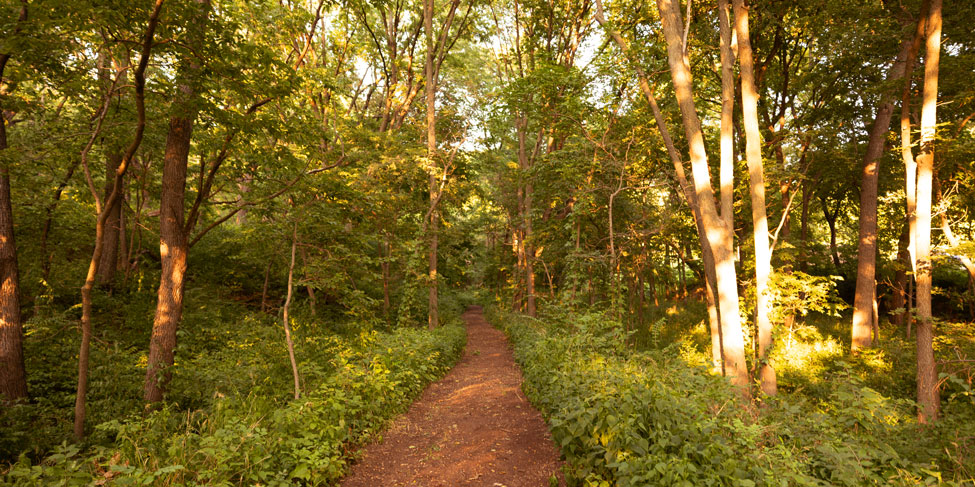
Outdoor adventures are abundant in Sioux City. “It’s definitely a fabulous place to explore and discover,” says Theresa Kruid, education director for Woodbury County Conservation.
Stone State Park offers miles of well-marked trails through the Loess Hills, breathtaking views, inviting picnic areas and a modern campsite. The nearby Dorothy Pecaut Nature Center features an interactive “walk-under” prairie, a 400-gallon aquarium, live animal exhibits, natural history displays, butterfly and wildflower gardens, a discovery playscape for kids, and trails through Iowa prairie and woods.
Kruid says that restoring and maintaining native Iowa landscapes is important for future generations. “We have less than one-tenth of one percent of native prairies left in Iowa,” she says. “The prairie is a diverse ecosystem where things rely on each other for survival. For example, the yucca plant can’t bloom and pollinate without the yucca moth. There are a lot of symbiotic relationships like that in the prairie.”
Sioux City visitors can enjoy a stunning array of prairie wildlife, including songbirds, flowers, reptiles and amphibians — such as the ornate box turtle, a protected species. “One of my favorite animals here is a broad-winged hawk,” says Kruid. “They usually show up in the spring, and they have a long, piercing cry that you can hear throughout the summer.”
 Enduring Design
Architecture enthusiasts will enjoy three important, beautifully preserved buildings throughout Sioux City, many of which are open to the public and recognized nationally as historically significant. “Keeping these buildings up is a constant labor of love by very dedicated volunteers and business leaders,” says Anderson.
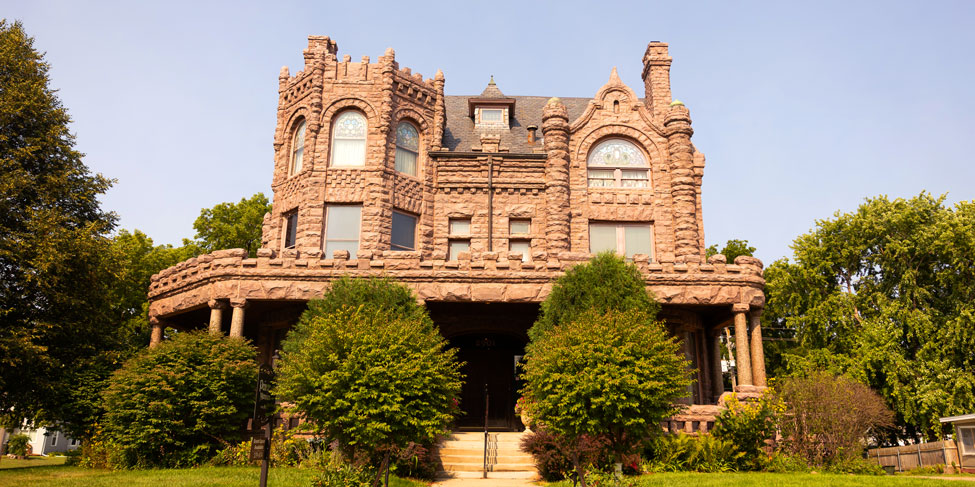
Peirce Mansion, an elegant home constructed with South Dakota quartzite, is an exceptional example of Richardsonian Romanesque architecture. “It’s just beautiful,” says Lindsey Gibbs, communications director for the Sioux City Public Museum. “Some of the rooms are still decorated as they would have been when [original owner] John Peirce lived there.” The Evans Block and Boston Block buildings are also in the Richardsonian Romanesque style.
The Warrior Hotel and Davidson Building exemplify bold Art Deco design, complete with geometric shapes, luxurious materials and modern sleekness. The Badgerow Building, a 12-story skyscraper with terrazzo flooring, brass elevator doors and marble wainscoting, is Art Deco as well.
With its horizontal lines, abundant natural light and terracotta detailing, the Woodbury County Courthouse is a model of Prairie School architecture, as championed by Frank Lloyd Wright. Similarly, the Williges Building was designed to complement the sweeping Midwest landscape.
 A Hidden Gem Worth Remembering
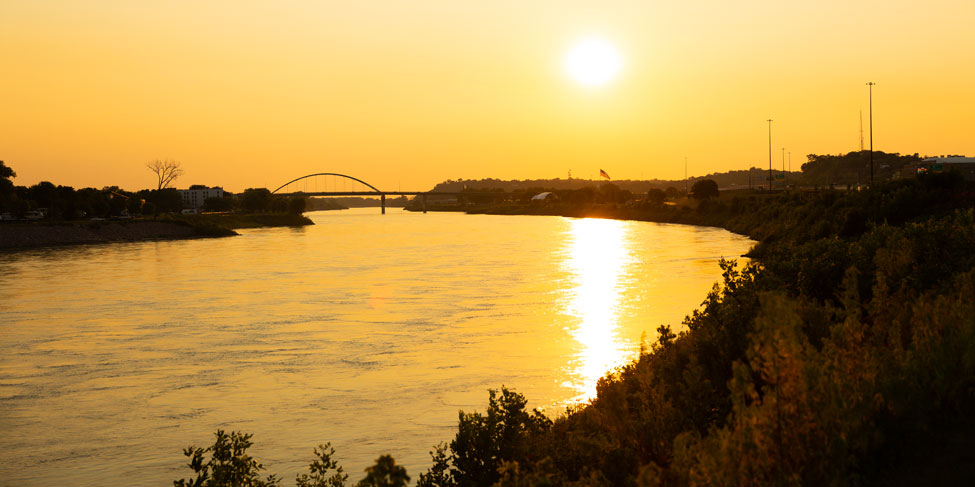
Sioux City has a fascinating history, endless things to see and do and extraordinary people who care about preserving the past while celebrating the future.
“I think the rest of Iowa kind of forgets we’re here because we’re on the very western edge of the state,” says Anderson, “but we’re a great community, and we’re trying our best to be a place where people want to come live or visit.”
Gibbs agrees. “The constant evolution of Sioux City is really unique and interesting,” she says. “We have tenacity.”