A Mahaska Masterpiece
April 1, 2026
By Gretchen Westdal Centers
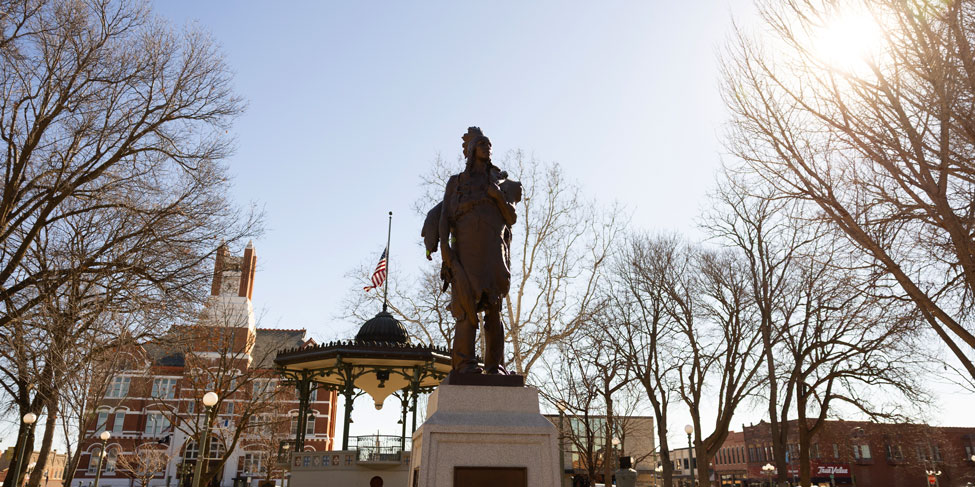
Stately, neat red brick buildings with well-appointed signs beckon customers inside. A small-domed, intricate octagonal bandstand constructed of handsome steel and concrete sits in the center of a tree-filled town square. Wide streets and sidewalks invite pedestrians to explore decorated alleyways that tell stories of the past and present. This picturesque scene could be out of a movie set, but for the lucky citizens of Oskaloosa, it’s home.
From its humble beginnings more than 180 years ago to now, Oskaloosa has sustained and grown its community. At a time when many smaller towns in Iowa are struggling to keep their main streets vibrant and their populations growing, Oskaloosa may be a shining example of how to honor the past while looking toward the future.
 Past to Present
The town was first settled in the mid-1800s by a group of Quakers. William Canfield established a trading post and built a homestead after the town was platted in 1844. Thirteen rudimentary cabins and two stores followed soon after. By the late 1870s, coal mining propelled the local economy forward, and the boom of the transcontinental railway further established Oskaloosa as a lucrative supplier of the country’s dominant energy source.
Both Oskaloosa and Mahaska County were named after the Native American peoples who long called this area home before the Quakers, Canfield and other settlers. Oskaloosa is derived from Ouscaloosa, the name of a Creek princess meaning “last of the beautiful,” who was married to Osceola, a Seminole Tribe chief. Mahaska was named to honor the Ioway Tribe chief Mahaska (White Cloud). This storied past is still honored today. In stately bronze, the statue of Chief Mahaska stands proudly in the town center.
Oskaloosa is the county seat of Mahaska County and leverages its prominence to support the local economy through strong agricultural ties, businesses of all sizes and community-led initiatives that help the area thrive. For a city with a population of around 11,500, there are plenty of diversions — many found only in larger cities — all contributing to a place that vibrates with life, arts and culture.
Nelson Pioneer Farm & Museum
Less than four miles from the town center, visitors can step back in time and be immersed in the early days of Oskaloosa. The Nelson Pioneer Farm & Museum is an impressive collection of original buildings dating from the mid-1860s to the early 1900s. It operates as a “living history site and museum village,” allowing visitors to experience
what agricultural life was like during the early pioneer days and to see the evolution and growth of Mahaska County.
With more than 15 sites to explore, learning becomes hands-on, and past stories come to life. Daniel and Margaret Carden Nelson settled the acreage as the Nelson Family Homestead upon their arrival from Ohio in 1841. The family originally lived in a log cabin and eventually built the two-story brick farmhouse that still stands today, welcoming visitors from May through September when the museum is open. The 230-acre operation remained in the family until 1958, when the Carden Nelsons’ grandchildren, Daniel Roy and Lillian, donated the farm, buildings and contents to the Mahaska County Historical Society to preserve their family’s legacy.
Other original buildings that showcase early agricultural efforts and pioneer life include:
• The Nelson Barn
• Summer Kitchen and Meat House
• An 1860s log cabin
• Prine One-Room Schoolhouse
• Mott General Store
• Spring Creek Voting House
• Wright Post Office
• Rus Scale House
• Coal Creek Meeting House
Additional points of interest include a nature trail, period events celebrating the area’s history and the only known mule cemetery in Iowa, honoring the Nelson family’s mules that assisted in Civil War efforts.
It’s a colorful destination that transports visitors to both the challenges and simplicities of early life on the farm.
Photos courtesy of Musco Lighting
Musco Lighting
In an area founded on coal mining and agriculture, it may be surprising to find a global leader in technologically advanced, large-scale LED lighting systems calling Oskaloosa home. But that’s where you’ll find the headquarters
for Musco Lighting. Founded in 1976, the company has grown steadily, specializing in sports, transportation
and infrastructure lighting found in professional stadiums, national landmarks and neighborhood fields around the world.
The company employs more than 2,000 people worldwide while maintaining a strong presence in Oskaloosa as its central hub for invention, administration, engineering and global project coordination. More than 800 team members are based locally, making Musco one of the area’s largest employers. The company is also deeply invested in the community, supporting global youth recreation and development initiatives, education and local events.
Theatre performance photo courtesy of Mahaska Chamber & Development Group
Thriving Downtown, Arts and Cultural Scene
In addition to Musco’s influence, industries such as manufacturing, farming and agriculture help fuel a thriving downtown, arts and cultural scene that sets Oskaloosa apart. Residents and visitors enjoy amenities such as the F.A.C.E. of Mahaska County and the Oskaloosa Art Center and Studio, which offer a diverse mix of classes for all ages. Programs include children’s summer camps, evening and weekend classes, gallery exhibitions and support for local artists.
Downtown Oskaloosa features a variety of walkable local shopping and dining options. Seasonal events — including Sweet Corn Serenade, Concert on the Square, Friday After Five, and Merry Little Downtown Christmas — draw crowds throughout the year.
The George Daily Auditorium, a nearly 700-seat theater, hosts both touring and local productions, further enriching the cultural landscape. The TRIO Entertainment Complex offers indoor recreation, including pickleball and tennis courts, as well as a golf simulator. A three-screen movie theater, restaurant and bar add to the entertainment options.
Residents and visitors alike come to Mahaska County for the many opportunities that pop up throughout the year.
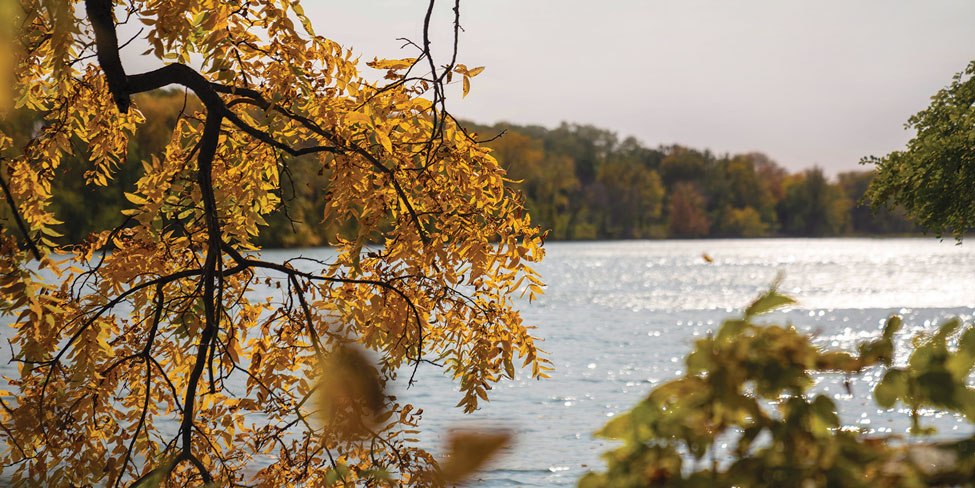 Photo courtesy of Mahaska Chamber & Development Group
Access to the Outdoors
For outdoor enthusiasts, the region is home to Lake Keomah State Park. The park features Iowa’s first man-made lake, currently undergoing restoration, and expected to be completed this coming spring. Once finished, the 84-acre lake will again offer boating, fishing and swimming, along with access to a stone lodge and boathouse.
The 366-acre park includes a three-mile hiking trail, as well as shorter paths connecting the lodge and campgrounds. During the winter months, snowmobiling is permitted on designated trails. City parks, including Edmundson Park, offer walking trails, disc golf, an inclusive playground, a swimming pool and picnic areas for warm-weather enjoyment.
Rooted Yet Rising
With its deep historical roots, forward-thinking businesses, active arts scene and access to both cultural and outdoor recreation, Oskaloosa exemplifies what small-town Iowa can be at its best. It is a community that values its past without being bound by it, investing in people, place and possibility. Whether visiting for a weekend or calling it home, Oskaloosa offers a compelling reminder that vitality, innovation and connection can flourish well beyond the boundaries of a big city.
Main article photo courtesy of Mahaska Chamber & Development Group