The Art of Keeping Time
March 13, 2026
By Gretchen Westdal Centers
In 1893, famed Czech composer Antonín Dvořák was homesick. He was traveling the country, touring and composing, meeting with other musicians and teaching. He was longing for his home country, but due to his commitments, he could not immediately return. The hustle and bustle of New York City had him yearning for quietude and nature.
His friend, violinist Josef Kovařík, persuaded Dvořák to visit his birthplace, the Czech village of Spillville, Iowa, for a visit and respite. Dvořák and his family spent the summer there. He was known to walk early in the morning as the birds were starting to chirp and the sun was just warming the quiet farming enclave of Czech settlers. Dvořák was so at peace and inspired that he would write composition notes on his shirt sleeves. Perhaps on those very sleeves, he composed sections of his famous String Quartet No. 12 in F Major, String Quintet No. 3 in E-flat Major and Symphony No. 9 that he wrote during his three-month stay in Spillville.
The residents welcomed him into their community. He’d often stop in to play organ at St. Wenceslaus Church —that still stands today — and tickle the ivories of pianos that adorned parlors in local homes. The Bohemians, as the Czech people were known, were happy to have such a talent in their village. Dvořák even considered making Spillville his permanent home, but his wife knew they needed to move on eventually to fulfill his commitments.
Alas, those three months in the sturdy red-brick home they stayed in were a happy and inspirational time for the world-renowned musician and composer. In that home, Dvořák tinkered with notes and timing, working to create just the right sound that would have his worldwide audiences moved by the beautiful artistry.
Carving Out Time
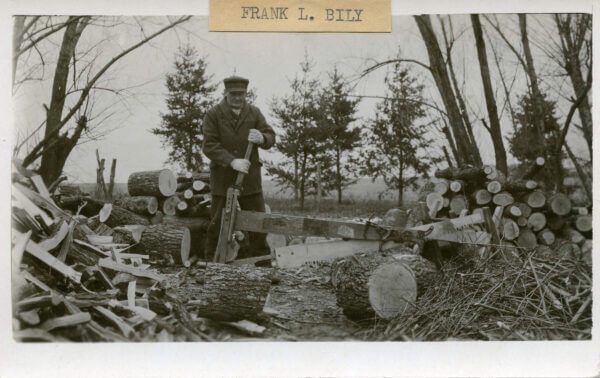
Twenty years later, in 1913, another art form began to emerge from the same area. Two Czech farmer brothers, Frank and Joseph Bily, had no intention of sitting idle during the long winter months when they were unable to tend their land between Ridgeway and Spillville. The Bily Brothers began wood carving. Starting with the oak, walnut and maple found on the farm, the brothers honed their hobby. Eventually, in between chores and maintaining the farm, intricately carved clocks began to line the walls. They were self-taught, but the visitors who began passing through to see these works of art would think professionals did these.
“The attention their clocks garnered baffled them,” laughs Alicia Klemish, an employee at the Bily Clocks Museum located in Spillville, and is also surprisingly the same location where Dvořák stayed in the summer of 1893. “This was just a hobby to the brothers. They were farmers first.”
They constructed a small building to house the clocks so visitors could come and admire Frank and Joseph’s work. The story goes that their sister started charging admission — a dime a visitor — and when the Bily Brothers heard, they met people as they were leaving to apologize and give back the money.
“They couldn’t quite understand why people were so fascinated with something they just did for enjoyment,” says Klemish.
 Art and Function
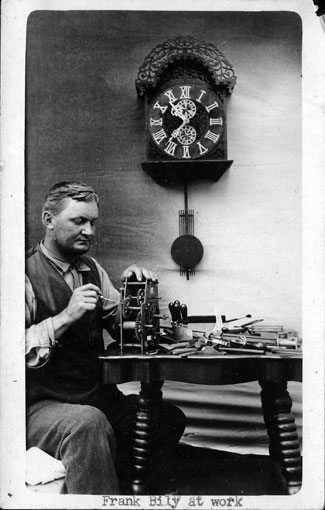
Despite their humility, they were skilled artisans who focused on storytelling and function. Their clocks are often massive in size and intricacy. Each one features detailed and elaborate carvings, moving figures and scenes that are inspired by history, religion and culture. There are musical elements and the ever-present tick-tock of well-made clocks. The Apostle Clock, built from 1915 to 1916, features the 12 apostles, one for each hour. It was inspired by the Astronomical Clock attached to the Old Town Hall in Prague, the capital of the Czech Republic, which has been counting down the hours since 1410.
One of their most famous pieces is known as The American Pioneer History Clock. Featuring 57 carved figures that showcase key scenes from American history and pioneers, it is nearly 10 feet tall and made from walnut, butternut, maple and oak. It took them from 1923 to 1927 to complete.
The clock was so impressive that word spread to capitalist Henry Ford. He had scouts who roamed the U.S. in search of art and collectibles to bring back to Michigan, where he ran Ford Motor Company. Ford reportedly offered the brothers $1 million for the clock. But the Bily brothers declined.
Adjusted for inflation, that would be roughly 18.7 million dollars today.
They believed the clock belonged in their community, where everyone could see and appreciate it. The idea that their hobby had drawn such attention puzzled them more than it impressed them. Eventually, they moved their clocks to what is now the Bily Clocks Museum and Antonín Dvořák exhibition.
 Time Stands Still
That sense of accessibility for the community to view their work has been preserved. People can visit the museum from May through October to experience the artistry that came from the region and has been preserved through care and devotion by the still present Czech community.
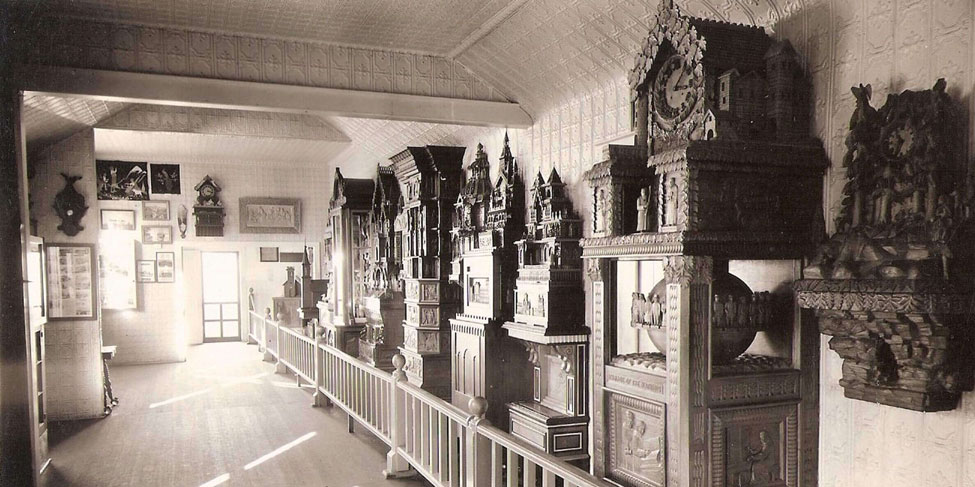
On the first floor, the museum houses more than two dozen clocks made by the brothers, along with additional carved works that showcase their remarkable skill.
Maintaining these delicate pieces is a careful balance between preservation and performance. Many of the clocks still run, but only during guided tours to reduce wear and tear. Some are too fragile to operate on a regular basis.
“We have an annual tradition of ‘clock oiling day,’” explains Klemish. “This is when professionals gently treat the mechanisms and wooden components with a special oil to help preserve them.”
When several clocks are played during a tour, the sound is surprisingly subtle. Rather than chiming all at once as they might have originally, each clock is activated individually so visitors can experience its music and motion on its own.
On the second floor, visitors can view many historical artifacts from Dvořák’s time in Spillville.
“People come from all over to Spillville to embrace their connections to Dvořák, their heritage and their relationship to the Bily Brothers,” says Kelmish. “There’s a strong sense of community, and this museum and city bring that together.”
In an age when time moves so quickly, carving out a special trip to visit the past is significant. It almost makes time stand still.
Photos courtesy of Bily Clocks