The History of Lawn Care
August 10, 2026
By Gretchen Westdal Centers
Porcupine grass. Scribner’s panic grass. Little barley. Gamma grass. These are just a few of the native grass species found in Iowa. But are they the dominant grasses that make up lawns throughout the state? Most likely not.
For most of recent history, the American lawn has stood as a status symbol for many. Uniform, lush green lawns with automated irrigation and chemical fertilizers. Dense turf coverage with closely cropped blades. These are often the characteristics that define neighborhoods.
But why?
And are there easier, more sustainable — for both you and the lawn — alternatives to this regimented system that has
mowers and weed whackers blaring at all hours of the day?
Read on.
Yard Birds Be Gone
In the wake of the American Revolution, former colonists were not only trying to create a new country but also to establish themselves as genteel, civilized and commanding. This aspirational image was in stark contrast to the stories European visitors brought back to the continent about the general situation the U.S. found itself in after the war.
Depictions of rudimentary homesteads and tales of yard birds, chickens — most often, milling and pecking about in the front yards of homes cast a paltry light on the country. For the landed gentry — white, property-owning men, many of whom had enslaved labor to care for their land — this reputation was unacceptable.
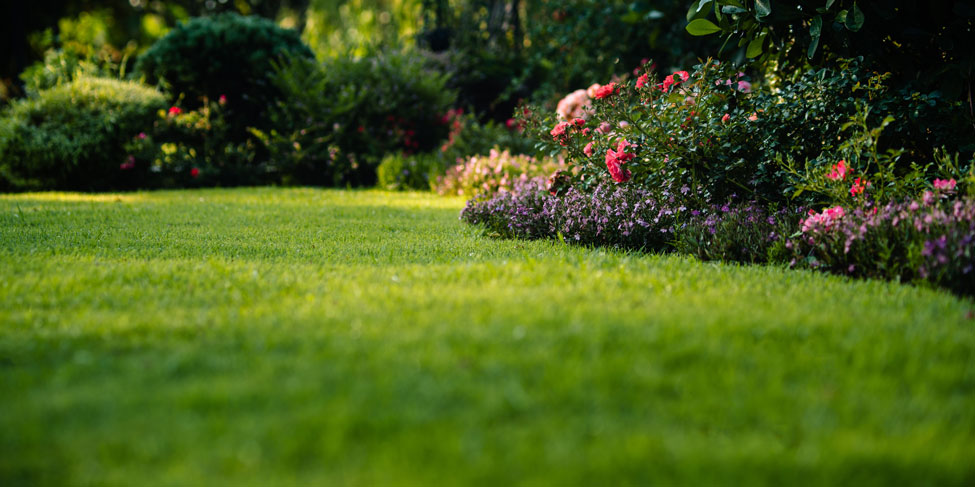
They sought to recast their image in that of what they knew as civilized. George Washington’s Mount Vernon and Thomas Jefferson’s Monticello were already well established with sweeping, open front lawns inspired by aristocratic European landscapes. And others followed suit. It was one thing to own land; it was another to be wealthy enough to use portions of it solely for decorative purposes. And thus, the pastoral lawn became a desire. The grand Neoclassical and Federal properties of the Eastern Seaboard began to be built with planned landscaping that was meant for strolling, hosting and enjoying.
 American Landscape Architecture is Born
As the U.S. transformed from 13 colonies into a growing, diverse country made up of bustling cities and towns with multifamily housing, the desire for space and land grew. Frederick Law Olmsted, who is known as the “father of American landscape architecture,” sought to democratize green space. He and his associate, Calvert Vaux were responsible for designing Central Park in New York City and some of the first planned communities and suburbs throughout the country.
Olmsted believed that access to nature and thoughtfully designed green spaces offered a reprieve from the daily struggles of life. He was instrumental in designing countless neighborhoods featuring unfenced front yards, curving roadways that followed the natural topography, green vistas blending grasses and trees and shared greenways that integrated nature.
Riverside, Illinois and Sudbrook, Maryland, are two prime examples of Olmsted’s planning. He believed “A man’s eyes cannot be as much occupied as they are in large cities by artificial things, or by natural things seen under obviously artificial conditions, with a harmful effect, first on his mental and nervous system and ultimately on his entire constitutional organization,” noting the importance of everyone being able to take in the natural wonders that abound.
The Lawn as a Hobby and Status Symbol
As suburbs sprouted up throughout the latter part of the 20th century, lawn maintenance became part of the standard chore rotation. The first mower had been invented in England in 1830, and American patents followed in 1868. Mower technology continued to evolve throughout the 1900s, with Toro creating the first power mower marketed for homeowners in 1938.
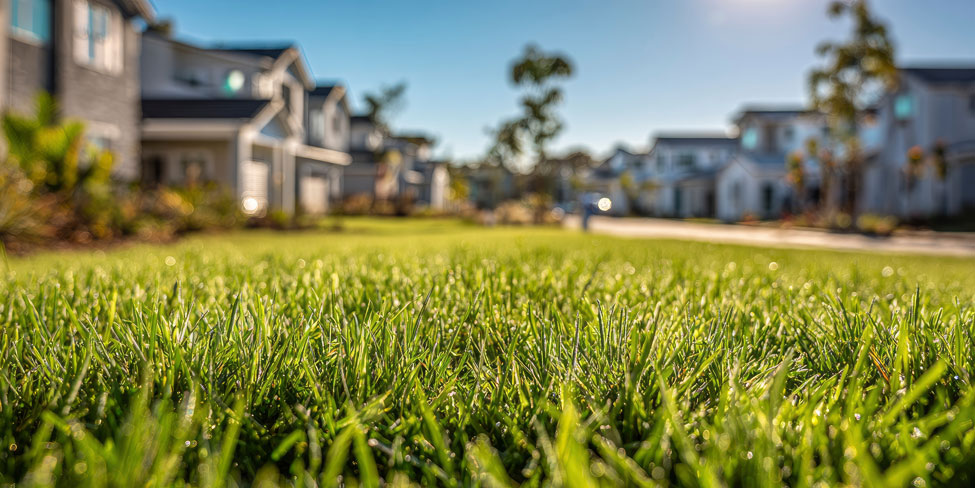
Also in 1938, the Fair Labor Standards Act was passed, creating the 40-hour work week. This allowed Americans to use their weekends to work in the yard. In the post-World War II economic boom, as home ownership grew, yard maintenance became more of a hobby than a chore. A green, manicured lawn became a symbol of the American Dream. Pride of homeownership was intertwined with uniform, green lawns.
“The lawn as we know it today came to be after World War II,” says Aaron Steil, Consumer Horticulture Extension Specialist at Iowa State University. “In particular, the desire to control the lawn and the machinery used to maintain our lawns really came to be. You combine that with the rise of the suburb and the kind of keeping up with the Joneses mentality that really came out of the 1950s and 1960s, and that’s how we got our lawn.”
 Modern Mastery
For Steil and his fellow Iowa State University colleague, Associate Professor of Commercial Turfgrass Adam Thoms, the past doesn't have to dictate how we care for our lawns today. They believe there are easier ways to maintain an enjoyable yard without stress or rigid maintenance. They suggest some easy ways to support turf health, pollinators, and the environment.
1. Define Your Purpose and Start Small
Grass is often planted automatically simply because we don't know what else to do with open land. Step back and define your yard’s actual function: Do you need durable turfgrass for kids, pets or sports? Or is the lawn serving as a clean design backdrop for garden features?
You don't have to overhaul your entire property to be sustainable. Start small by converting a shady corner, a side yard, or a section of the backyard. Learn what works for your space before altering more visible areas.
2. Master Your Mowing
Both experts agree that mowing too low (around 2 inches) creates plant stress. Raise your mower deck to 3.5-4 inches. Taller grass encourages deeper root systems, helps the soil retain moisture during dry spells, naturally outcompetes weeds, and provides a softer feel underfoot.
Never remove more than one-third of the blade at a time and leave your grass clippings on the lawn. Modern mulching blades chop them finely, returning free nutrients and natural fertilizer directly to the soil.
3. Soil Care
Run a basic annual soil test, which costs around $25, to check nutrient levels. Many Midwest soils already contain sufficient phosphorus and potassium, saving you money and preventing unnecessary runoff.
Aeration is one of the most underused practices for yard health. It relieves compaction, allowing oxygen, water and nutrients to penetrate deeply into the root zone. Established yards benefit from yearly aeration, ideally in the fall, while brand-new construction zones with scraped topsoil may need it in both spring and fall.
4. Practice Mindful Water Conservation
Established lawns require about 1 inch of water per week, either from rain or supplemental watering. Always turn off automated sprinkler systems when it rains.
It is entirely normal and safe for cool-season turf to go brown and dormant for up to 30 days during peak summer heat. The lawn will recover naturally once cooler fall rains return.
5. Tailor Alternatives to Your Landscape’s Needs
For low-water areas, consider native grasses that require fewer inputs and thrive in heat, though they stay brown longer in spring and green longer into summer.
If grass continually struggles under dense shade, stop reseeding it annually. Native sedges (like Pennsylvania sedge) thrive in shade and wet soils, require little to no mowing (1–3 times a year), and offer a soft, natural aesthetic.
Integrating low-growing broadleaf plants (like Dutch clover) into turf increases ecological diversity and drastically reduces reliance on synthetic herbicides, which would otherwise kill the added plants.
Following these easy steps will help you strike a balance between careful care and enjoying your yard without extra stress.